

Report on ethical finance in Europe
Capital for the Common Good is the guiding thread of this 8th Report on Ethical Finance in Europe.
It stems from a simple conviction: when capital is directed towards people, enterprises and communities, it can become a lever for a more resilient and inclusive financial system.
The Report intertwines three perspectives that, taken together, offer a comprehensive view of ethical finance today. It analyses the solidity, credit quality and social impact of Europe’s ethical banks; compares their performance with that of the mainstream banking sector; and focuses on the social economy — their key partner and main area of activity.
Ethical finance is no longer an alternative; it is a necessity. This is the conclusion emerging from this year’s Report: a model that is solid, credible, and capable of generating social and environmental impact without compromising economic stability. As Ruth Paserman (European Commission) recalled at the opening of the 2025 FEBEA Conference, “ethical finance is fully in tune with our times”.
As Fondazione Finanza Etica in Italy and Fundación Finanzas Éticas in Spain, as part of the Banca Etica Group and the wider international movement for ethical finance, we wish to reaffirm a key idea: financial stability, social cohesion and peace are not separate goals, but dimensions of a shared project.
Making this project visible, demonstrating that it is viable, and expanding spaces for dialogue within and beyond European institutions — these are the challenges that guide our work, and that this Report helps to bring to life.
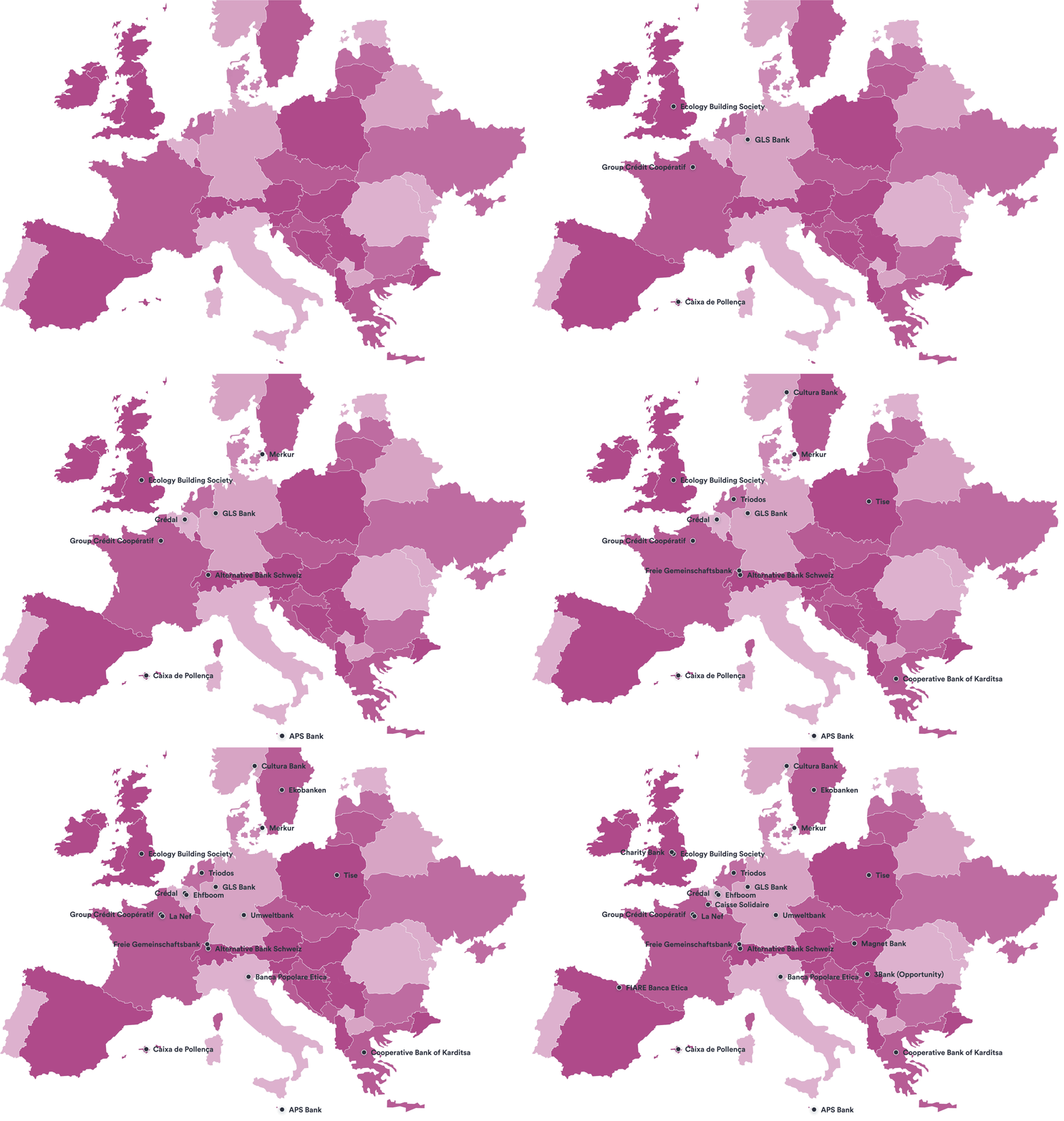
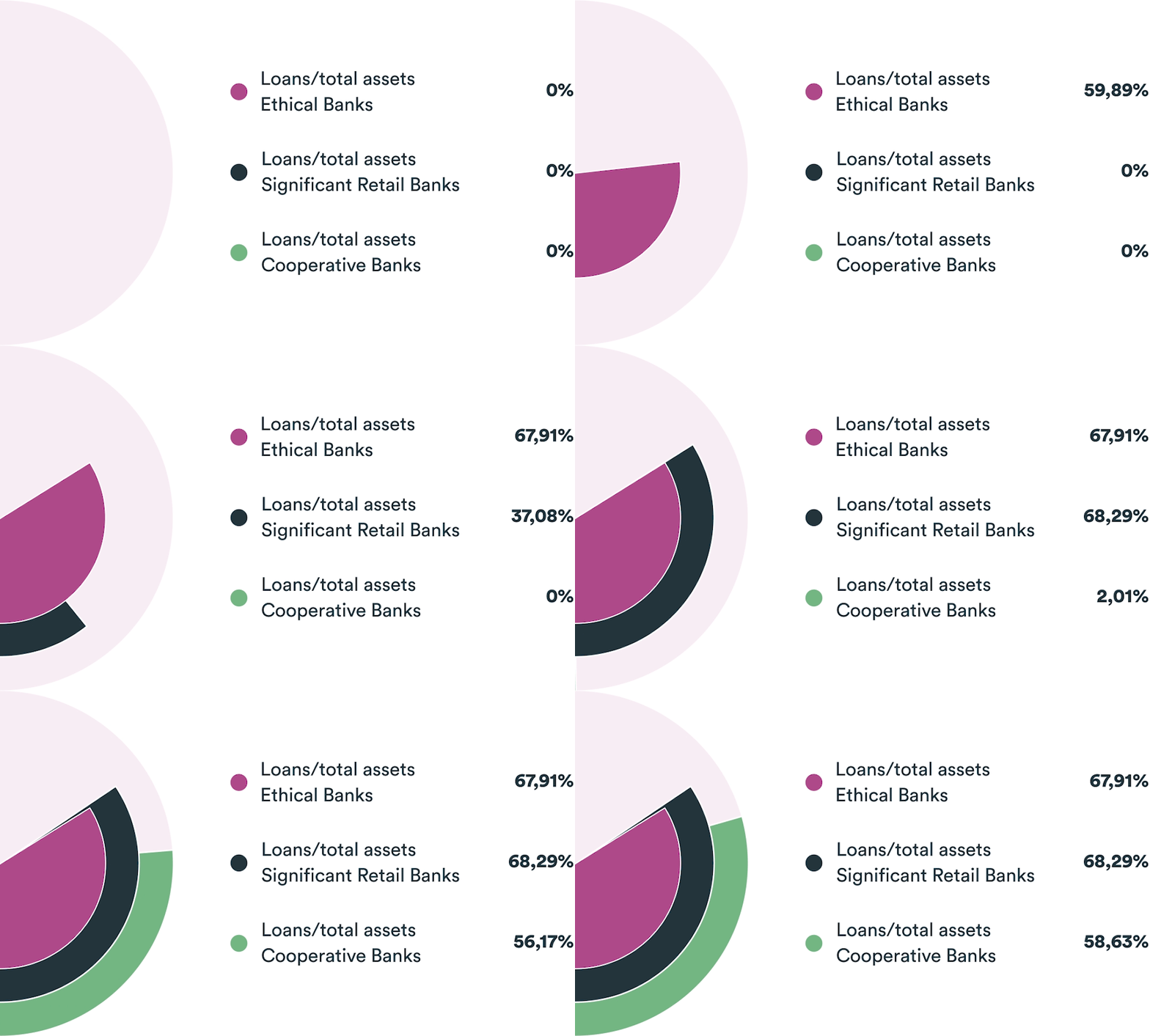
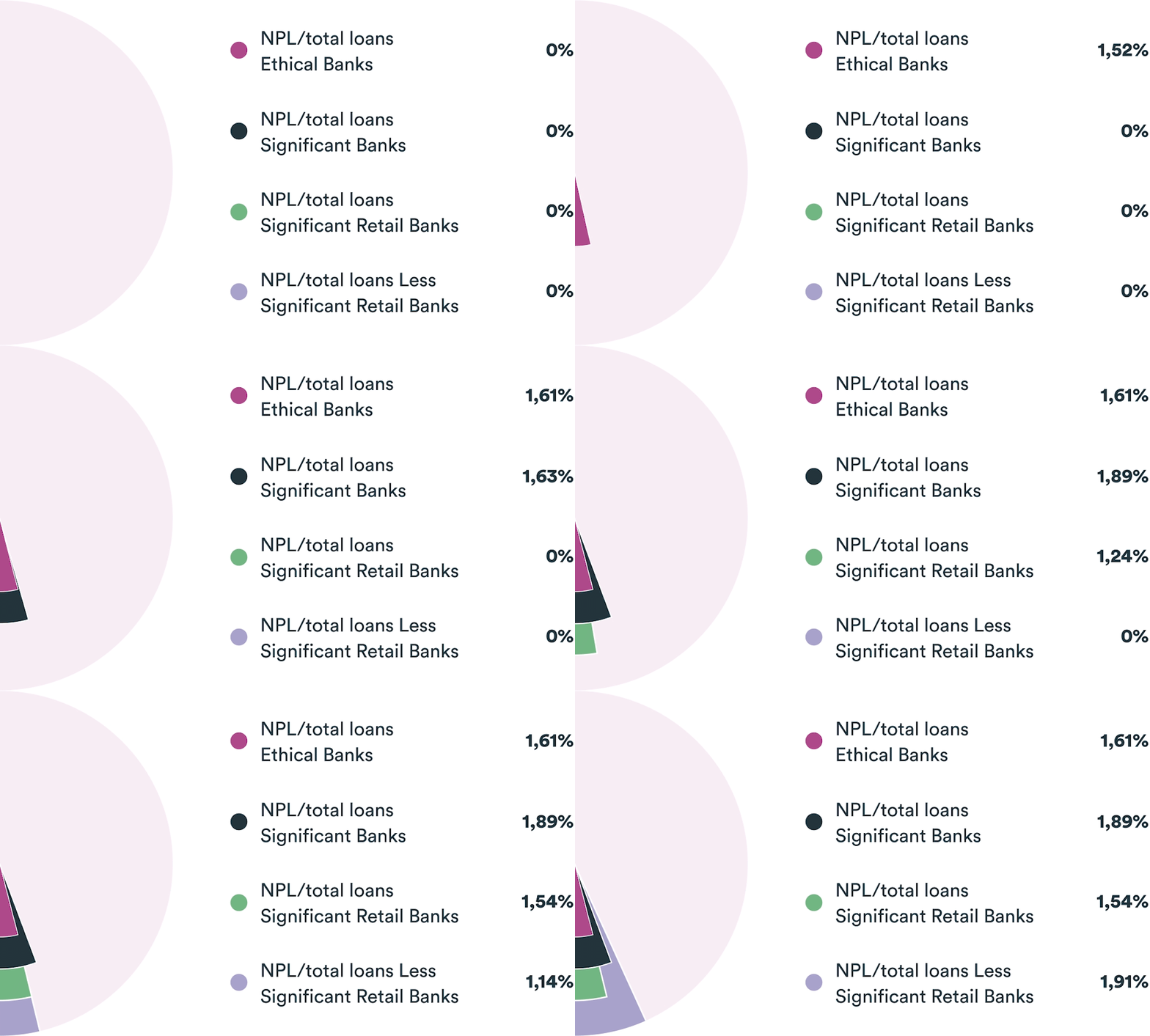
Ethical Banks and Large European Banks: the Numbers that Explain the Differences
Strong fundamentals, lasting impact. In 2023, ethical banks managed €79 billion in total assets, with loans accounting for 67.9% of their balance sheets — higher than Europe’s largest banks (60.9%) and comparable to retail institutions.
This lending focus shows a clear commitment to the real economy: households, enterprises and social organisations.
Quality credit, sustainable returns. Non-performing loans stand at 1.61%, below the 1.89% recorded by large banks, while returns on assets are stronger (0.75% vs. 0.64%).
In some cases, as much as 93% of loans support micro-enterprises — a level of proximity to the real economy rarely found in the banking sector.
Environment, Society And Governance: Looking Beyond Operations
It’s not only how a bank operates that matters, but also what it finances.
The Report extends its analysis to the indirect impacts of financial activities.
Data show that 72% of ethical banks’ lending produces positive social or environmental effects, compared with only 19% among the largest banks.
These are voluntary choices — not regulatory obligations — that reveal consistency and the ability to anticipate tomorrow’s standards.
The Social economy in Europe
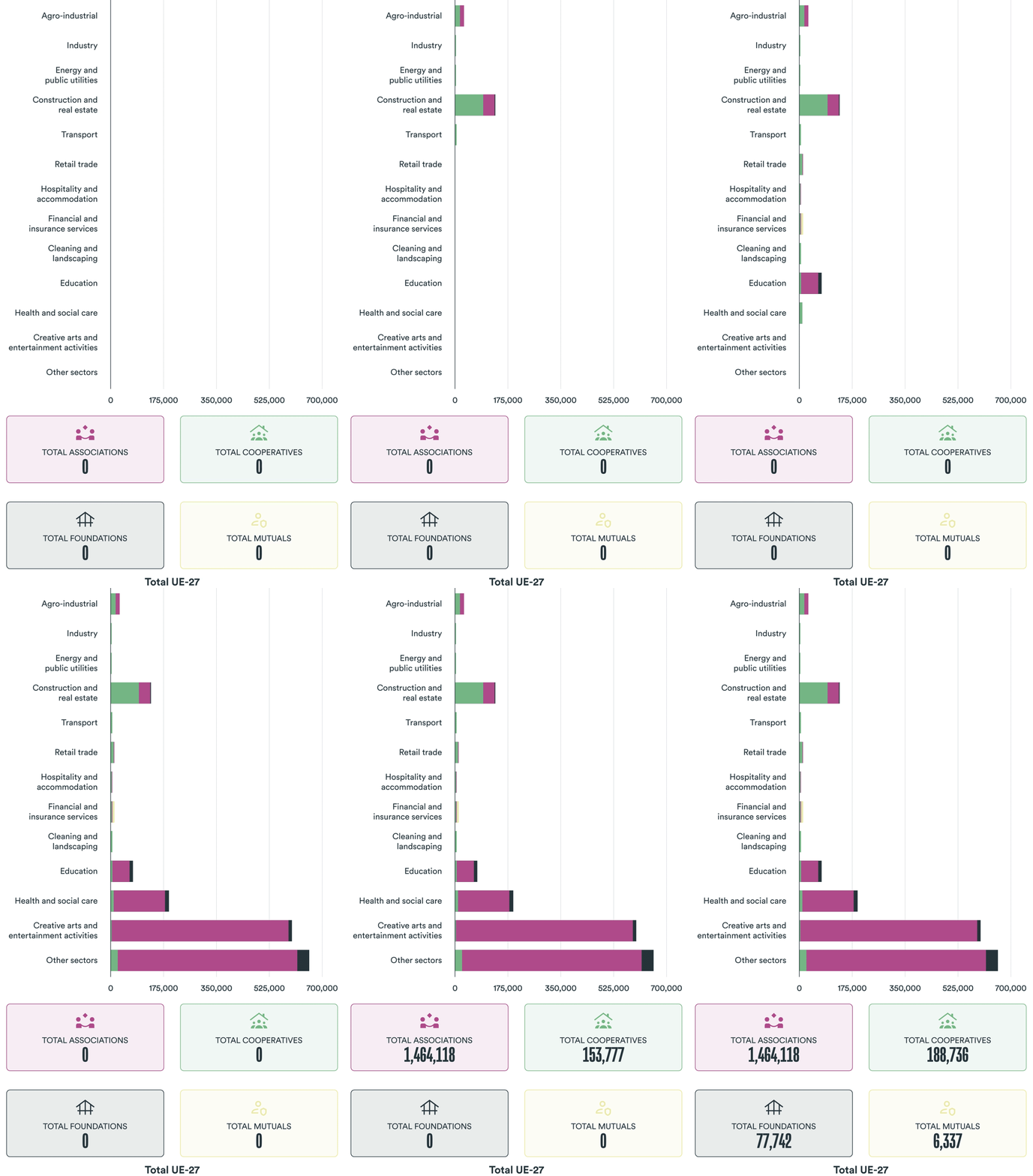
The contribution to the social economy is structural and long-term. Across Europe, this sector includes more than 4.3 million organisations — almost nine out of ten are associations, followed by cooperatives and foundations. This ecosystem is essential to Europe’s social and territorial cohesion.
Ethical banks direct over 70% of their loans to this sector, compared with 19% among systemically significant banks — a deliberate choice about where to channel resources.
The analysis leads to concrete recommendations: to truly support the social economy, Europe needs capital instruments adapted to the size of social enterprises, simpler and more accessible public guarantees, and, above all, direct involvement of social organisations in the design of financial policies and tools.

A more heavily armed Europe: reversing the green agenda
The Report also turns its gaze to the European policy landscape.
The proposal to include arms manufacturing among “sustainable” activities risks undermining the credibility of the EU’s financial framework.
Ethical finance stands firm on a clear principle: peace, social cohesion and ecological transition must remain the cornerstones of any finance that claims to be at least sustainable.